
Industry: Gaming / EdTech (Star Stable)
Executive Summary
I redesigned the early and mid-game progression and retention mechanics for Star Stable, a horse adventure MMO aimed at younger players. By treating churn as an experience problem rather than a performance metric, I focused on clarity, recognition, and visible progress. The resulting loyalty system supported long-term engagement while remaining age-appropriate and parent-friendly.
My Role: Product Lead / Experience Strategist (Research, Journey Mapping, Progression Logic, Retention Design).
Context and Challenge
Star Stable relies on strong early engagement driven by exploration and narrative. As the game expanded, players in the mid-game stages began to lose momentum as the experience became more open-ended.
-
The Experience Gap: Players often reached a point where they were unsure what to do next, leading to a loss of purpose and eventual churn.
-
Design Constraints: Any solution had to avoid aggressive monetisation or pressure-based mechanics. The system needed to remain fair, transparent, and approved by parents.
My Approach: Churn as an Experience Problem
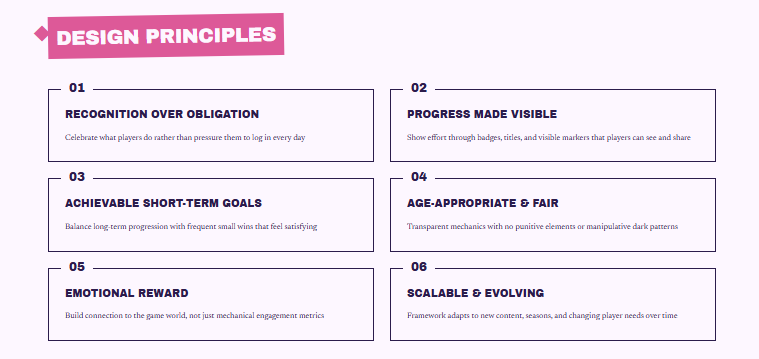
I approached retention by focusing on player motivation and psychological clarity rather than just chasing metrics.
The Solution: A Gentle Support System
I designed a progression and loyalty system that focused on supporting momentum through encouragement rather than obligation.
-
Visible Progress Markers: We introduced cosmetic rewards, badges, and titles unlocked through play rather than spend. This made achievements feel tangible and earned.
-
Motivation Mechanics: I implemented weekly goals linked to care routines and quests. We used gentle streaks that rewarded consistency but purposefully avoided penalties for missed days.
-
Re-engagement Flows: We designed “Welcome back” flows that referenced a player’s past progress and provided a single, clear next action to reduce the overwhelm of returning after a break.
The Iteration: Learning from Friction
During the initial rollout, we discovered that some traditional gaming mechanics did not translate well to our younger audience.
-
The Feedback: Early versions of the streak system felt too much like homework and created a sense of pressure.
-
The UX Improvement: I pivoted the design to remove punitive countdowns and progress loss. We also narrowed the gap between reward tiers to ensure wins felt frequent and achievable.
-
The Result: By removing the “fear of loss,” we actually saw higher daily consistency because the game remained a place of joy rather than a chore.
The Outcome
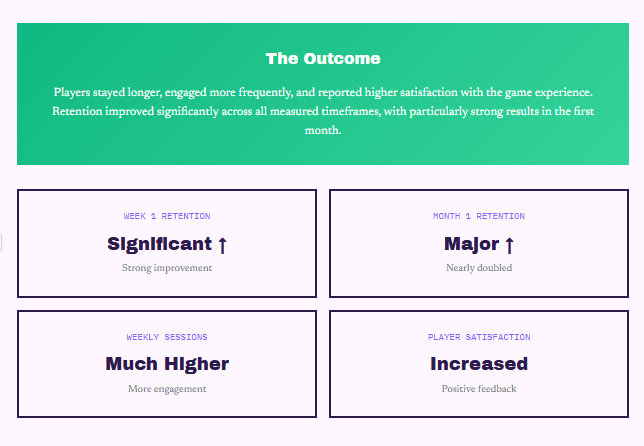
The project turned a complex progression path into a clear and rewarding journey for younger players.
-
Player Impact: Reduced uncertainty around next steps and a stronger emotional connection to the game through visible recognition of effort.
-
Business Impact: Lowered early and mid-stage churn and increased lifetime engagement. The loyalty system proved so successful it became the foundation for future seasonal content.
-
Parental Trust: We received positive feedback on the fair design, as the separation between loyalty rewards and monetisation remained clear and ethical.

Key Learnings
-
Recognition Beats Pressure: Especially for younger audiences, acknowledging effort is more effective than creating artificial urgency.
-
Progress Must Be Visible: Visual markers like stable upgrades or titles matter significantly for maintaining a sense of purpose.
-
Clarity is Critical for Returners: A returning player needs a clear path back into the experience to prevent them from feeling immediately lost.