Industry: Home Appliances (E-commerce)
Executive Summary
I designed and prototyped a conversational interface for a major retailer to replace dense technical filters with a guided dialogue. This helped customers navigate hundreds of complex appliances and choose the right product without needing technical expertise.
My Role: End-to-End Product Design (Research, UX/UI, Prototyping, Usability Testing).
Context and Challenge
Buying a washing machine or fridge shouldn’t require a degree in engineering. However, the retailer’s digital experience forced customers to self-diagnose their needs using technical jargon:
- The User Pain: “I don’t know what 1400rpm or an Inverter Motor means for my daily life.”
- The Business Pain: High abandonment on category pages and a surge in expensive “help me choose” customer support calls.
Through research, I identified a massive gap between how products are sold (technical attributes) and how people think (lifestyle needs).
My Approach: Guided Discovery
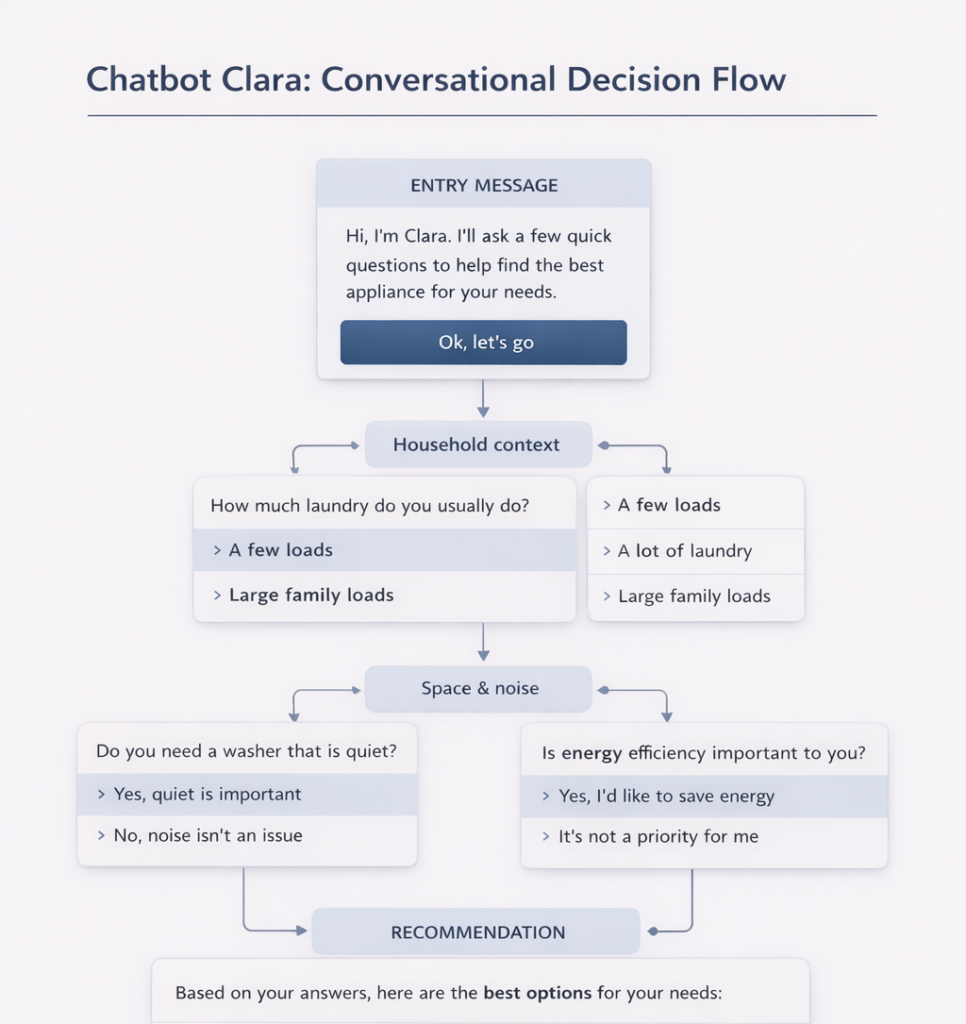
The Strategy: Move the “translation” work from the customer to the system. Instead of asking for a decibel rating, we ask if they run laundry while the kids are asleep.
I designed a sequence of 5–8 human-centric questions that narrow hundreds of models down to 3 top recommendations.
- Human-Centric UI: A calm, step-by-step interface that avoids “chatbot” tropes.
- Transparent Logic: Each recommendation includes a “Why this suits you” section, directly linking back to the user’s answers (e.g., “Chosen for you because it’s quiet enough for night use”).
- Safety Nets: Included “Not sure” and “Skip” options to reduce decision friction.
The Solution
The Impact
Usability testing confirmed that the guided approach outperformed traditional filtering in every key sentiment metric:
- Higher Confidence: Users felt they were buying the right machine, not just a machine.
- Reduced Anxiety: Eliminated the “fear of making a mistake” with high-ticket items.
- Efficiency: Drastically reduced the time spent comparing nearly identical spec sheets.
Next Steps
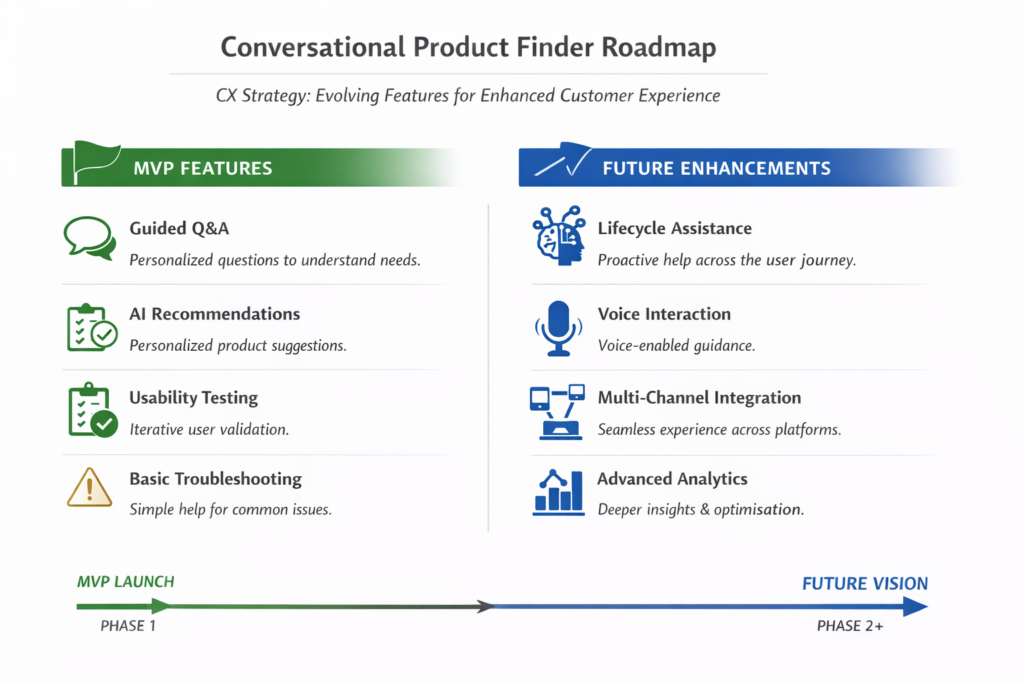
This prototype serves as the foundation for a Lifecycle Assistant. By maintaining this conversational layer post-purchase, the brand can support customers through delivery, installation, and eventually, proactive replacement when the appliance reaches its end-of-life.