
Industry: Travel Tech / Pet Care (Product Management Training)
Executive Summary
I led the end-to-end product development for Travel Tails, an AI-powered pet travel planning app, as part of an eight-week product management training programme at General Assembly. I applied full product management methodology including market research, user research, journey mapping, MVP definition, and validation. I delivered a high-fidelity prototype with strong user testing results, demonstrating structured product thinking and market validation in a realistic training environment.
My Role: Lead Product Manager (Research, Strategy, MVP Definition, UX Validation).
Context and Challenge
This project was completed as part of an intensive eight-week course designed to simulate real-world product development. Pet owners currently lack a trusted, central place to plan pet-friendly trips. Information about accommodation, activities, and regulations is fragmented, unreliable, and time-consuming to verify.
-
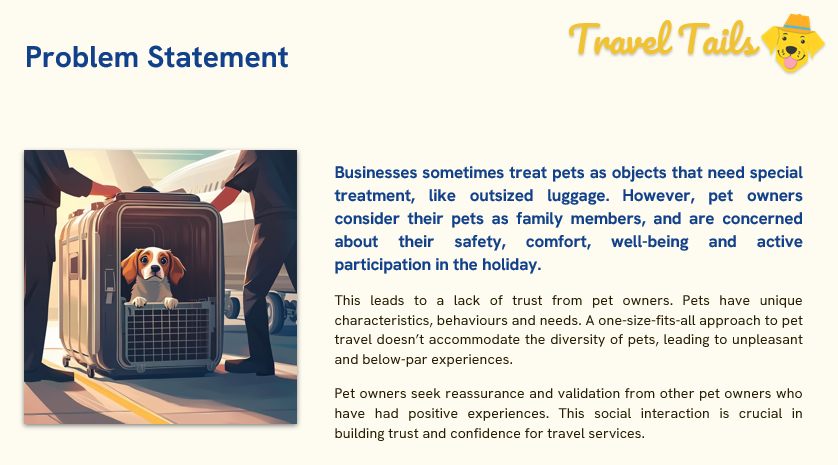
The Problem: High planning effort and low confidence. Pet owners spend hours cross-referencing sources to ensure a trip is genuinely pet-friendly.
-
The Opportunity: To reduce planning friction and increase confidence for travelling pet owners by centralising verified data through an AI-assisted interface.
My Approach: Disciplined Product Methodology
I followed a structured, end-to-end product management process to define the problem and validate the opportunity.
The specific steps I took included:
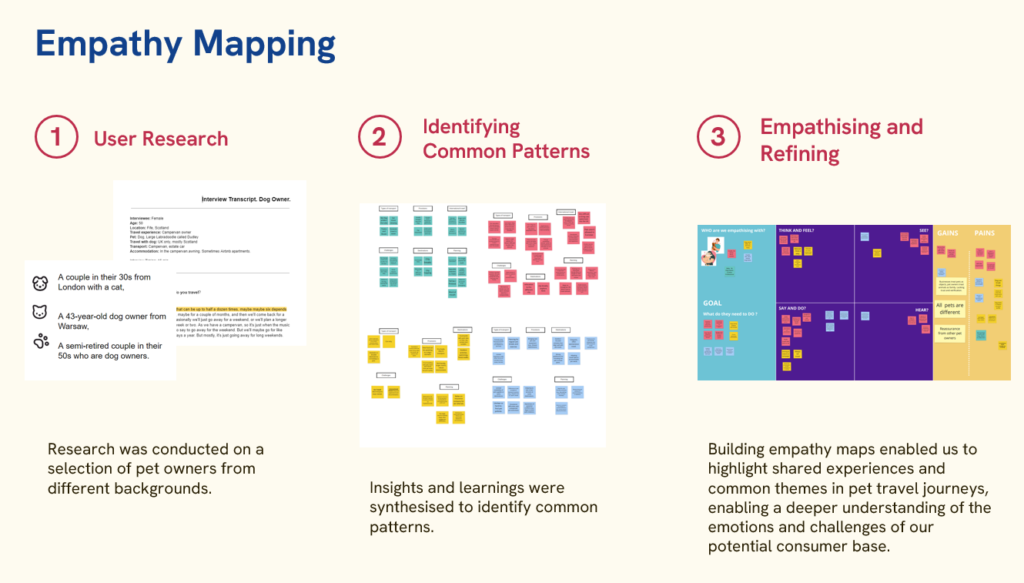
- User research and problem framing: I conducted qualitative interviews with pet owners who travel to identify key pain points around planning effort and uncertainty. I then created personas to represent different travel behaviours and confidence levels
- Journey mapping and opportunity identification: I mapped the end-to-end pet owner travel planning journey to highlight friction points and moments of high user value. This allowed me to define a focused problem statement for the MVP.
- Feature prioritisation and MVP definition: I wrote user stories to capture core needs and prioritised features based on user value and delivery effort. I defined a lean MVP that solved the primary planning pain points.
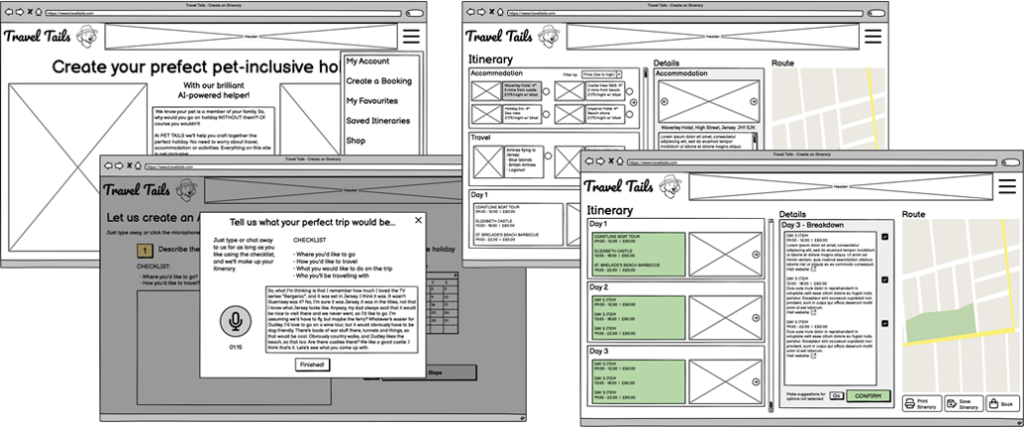
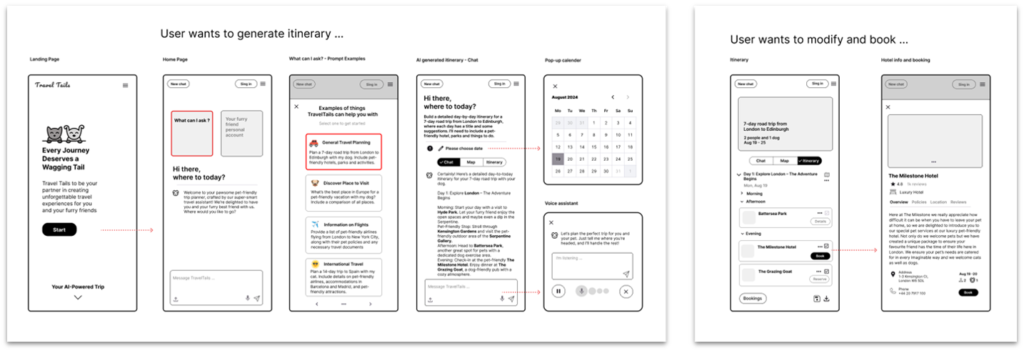
- UX design and validation: I collaborated with designers on wireframes and user flows. I then tested prototypes with users and iterated based on feedback to refine the navigation and information hierarchy.
-
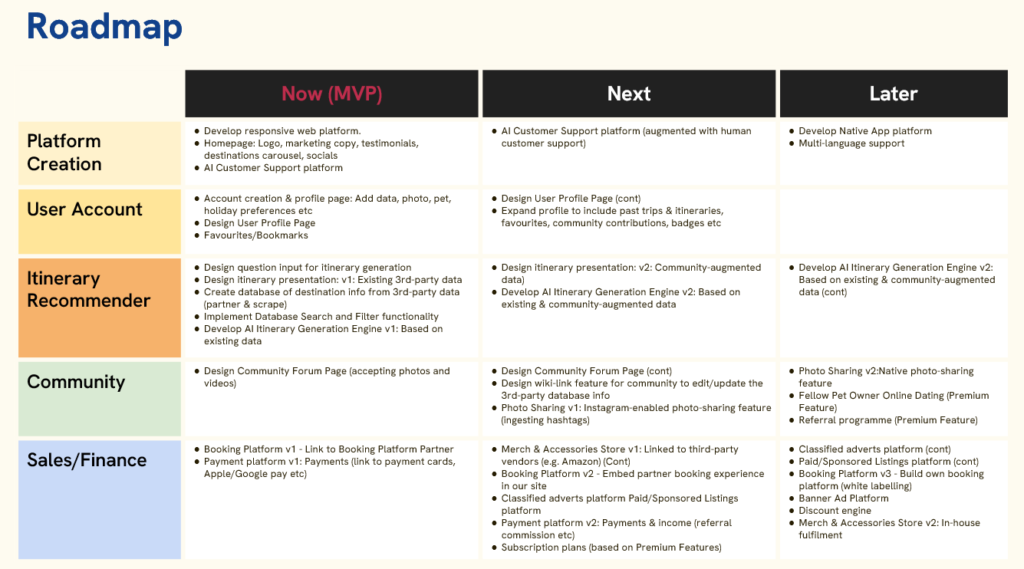
Roadmapping and handover: I created a product roadmap outlining the MVP and future enhancements while documenting all assumptions and next steps for the course assessment.
The Solution: The Centralised Planning Hub
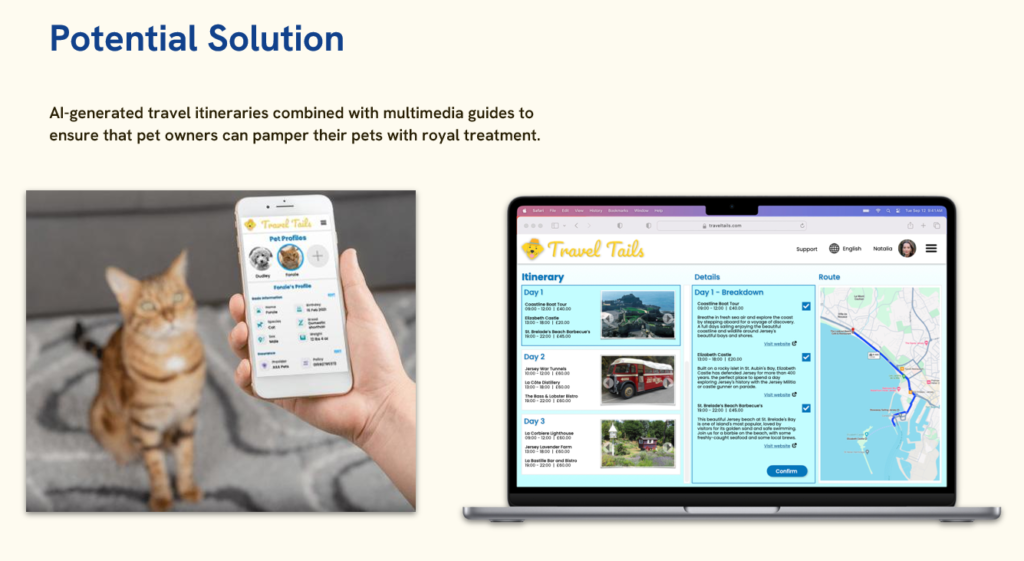
Travel Tails is a centralised planning concept for pet-friendly travel that brings accommodation, activities, and regulations into one place.
-
AI Discovery: The app uses AI to support discovery and planning efficiency based on specific breed requirements.
-
Verified Clarity: We replaced fragmented results with standardised pet policies to reduce planning effort.
-
Trust Focus: The product concept was validated through user testing to ensure it met the threshold for user confidence.
The Iteration: Refining Trust Signals
During user testing, I discovered that planning confidence is as important as information availability. Users felt that generic pet-friendly icons were not enough to build true confidence for high-stakes trips.
-
The UX Improvement: I pivoted the information architecture to include trust badges and specific details such as garden fencing height and proximity to vets as primary data points in the search results.
-
The Result: User testing scores for planning confidence increased significantly after these specific transparency features were added.
The Outcome
The project demonstrated a rigorous application of product management principles in a structured training setting.
-
Methodological Rigour: I delivered a well-defined MVP grounded in qualitative user evidence and disciplined prioritisation.
-
Product Thinking: I proved the ability to translate complex user frustrations into a testable, high-fidelity prototype.
-
Strategic Roadmap: I demonstrated the ability to create a clear path for future growth based on disciplined process rather than feature volume.
Key Learnings
-
Confidence is the Goal: In travel planning, information is secondary to the feeling of being certain.
-
Clear Problem Framing: A disciplined approach to discovery simplifies MVP scope and prioritisation.
-
Validation is Vital: User testing is critical even in training environments to move from assumptions to insights.